

Some minerals are known by every collector. Cornetite mineral is not one of them. Rare, small, and sourced from a single corner of the world in any quantity worth mentioning, it also happens to be one of the most beautiful blues in the mineral kingdom, which makes it exactly the kind of specimen worth stopping on.
A mineral with a name and a date
Mineralogists described cornetite in 1917, and it holds a distinction few minerals can claim: it was the first new mineral ever discovered in the Congo. It is named after Jules Cornet, the Belgian geologist who surveyed Katanga. He recognized the extent of its mineral wealth long before the region became one of the great copper provinces of the world.
It is a copper phosphate, a secondary mineral, which means it does not crystallize directly from the original ore. It forms later, in the oxidized zone where water weathers and reworks existing copper deposits over long periods. Cornetite is what copper becomes, under the right conditions, after the fact.
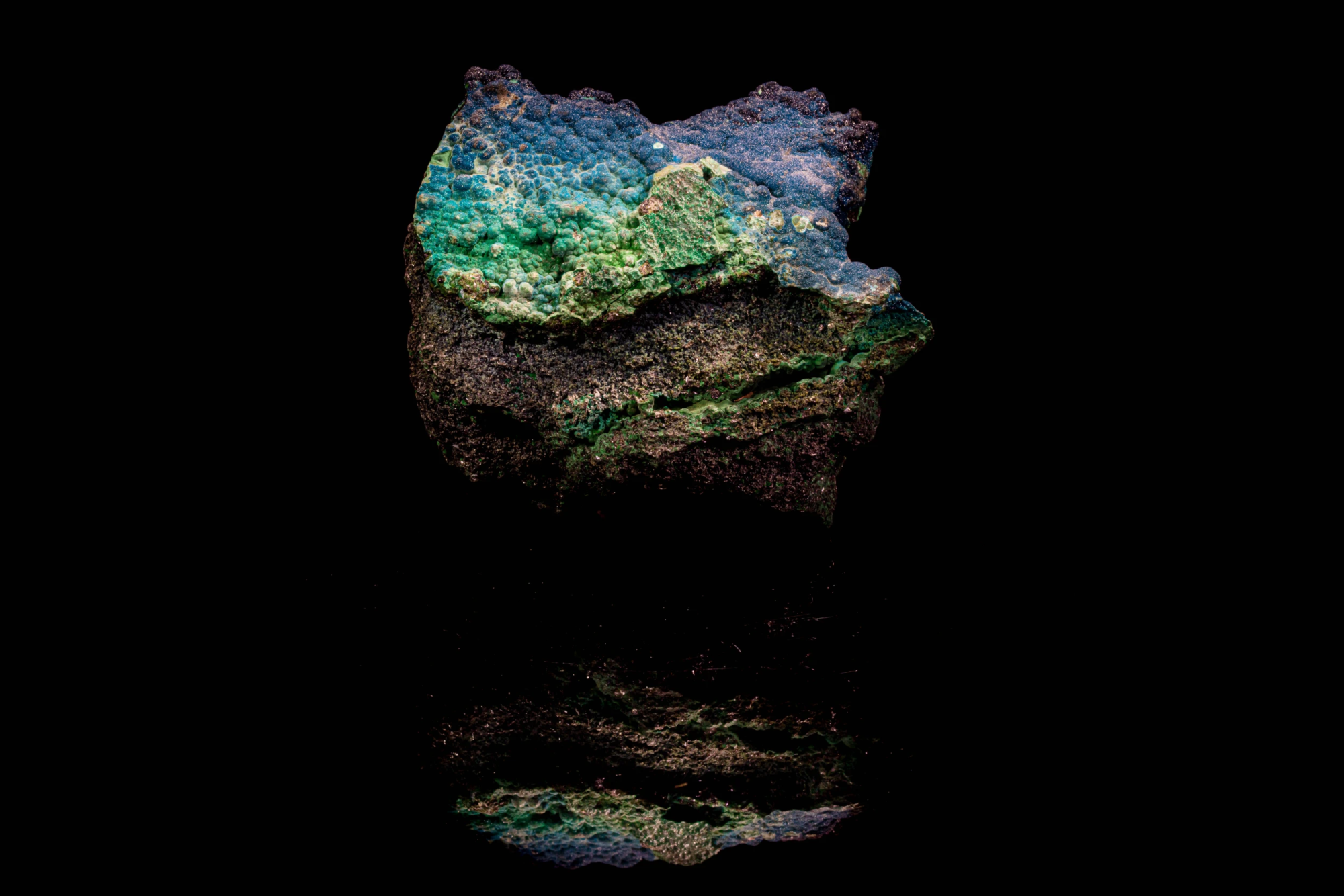
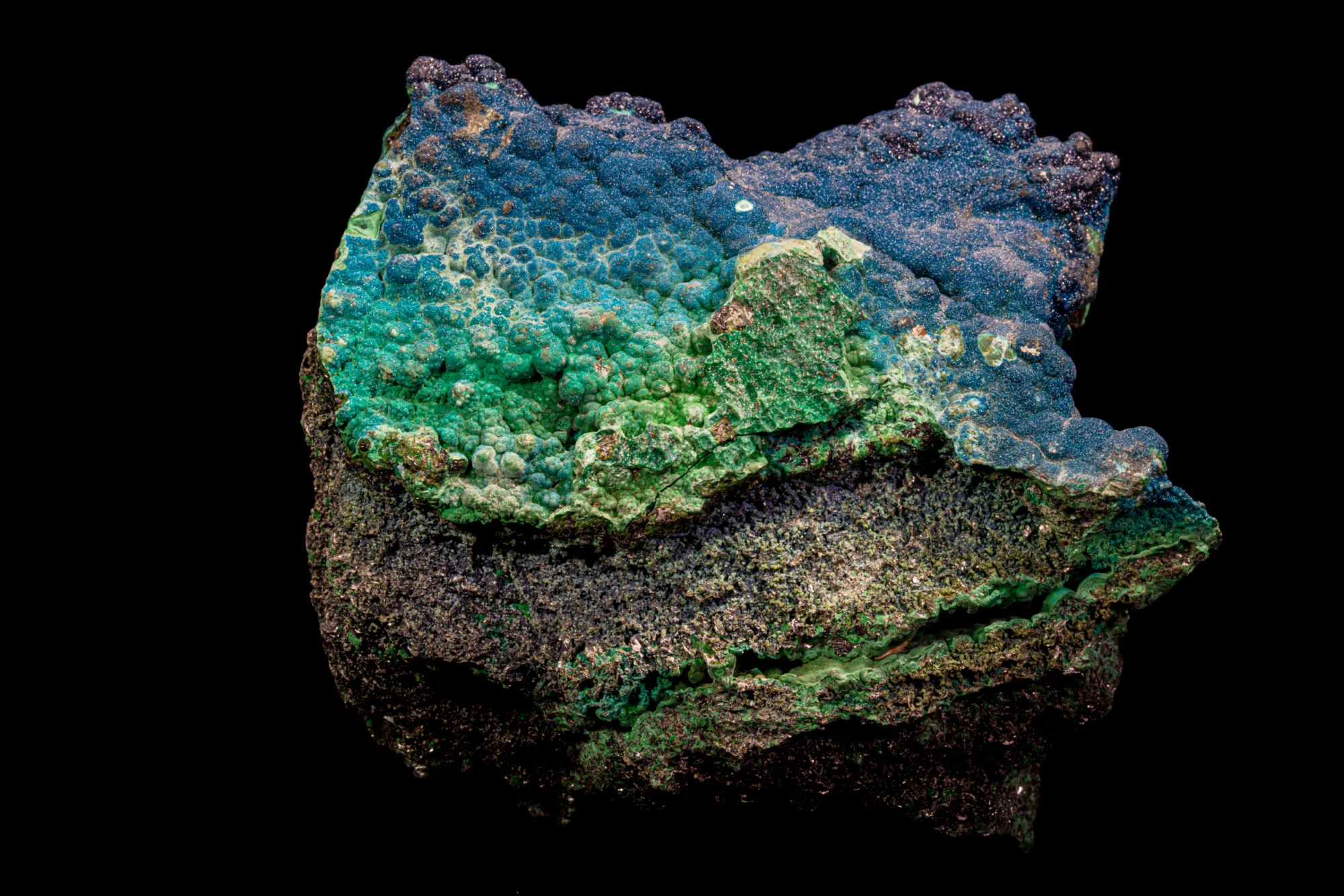
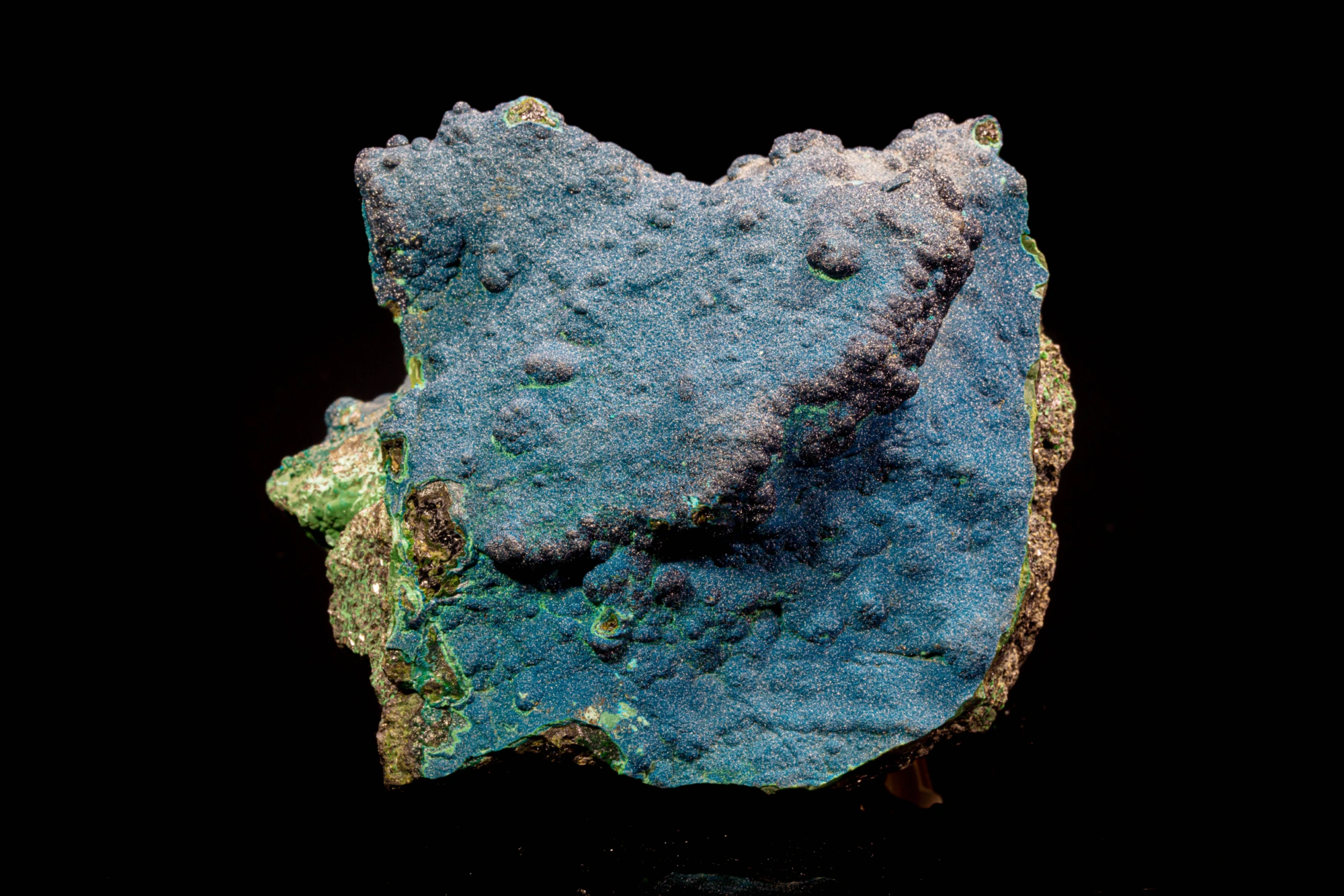
Its type locality, the place that first yielded it and still the source of the finest specimens, is the Star of the Congo mine near Lubumbashi, in Katanga. This piece comes from there.
The color
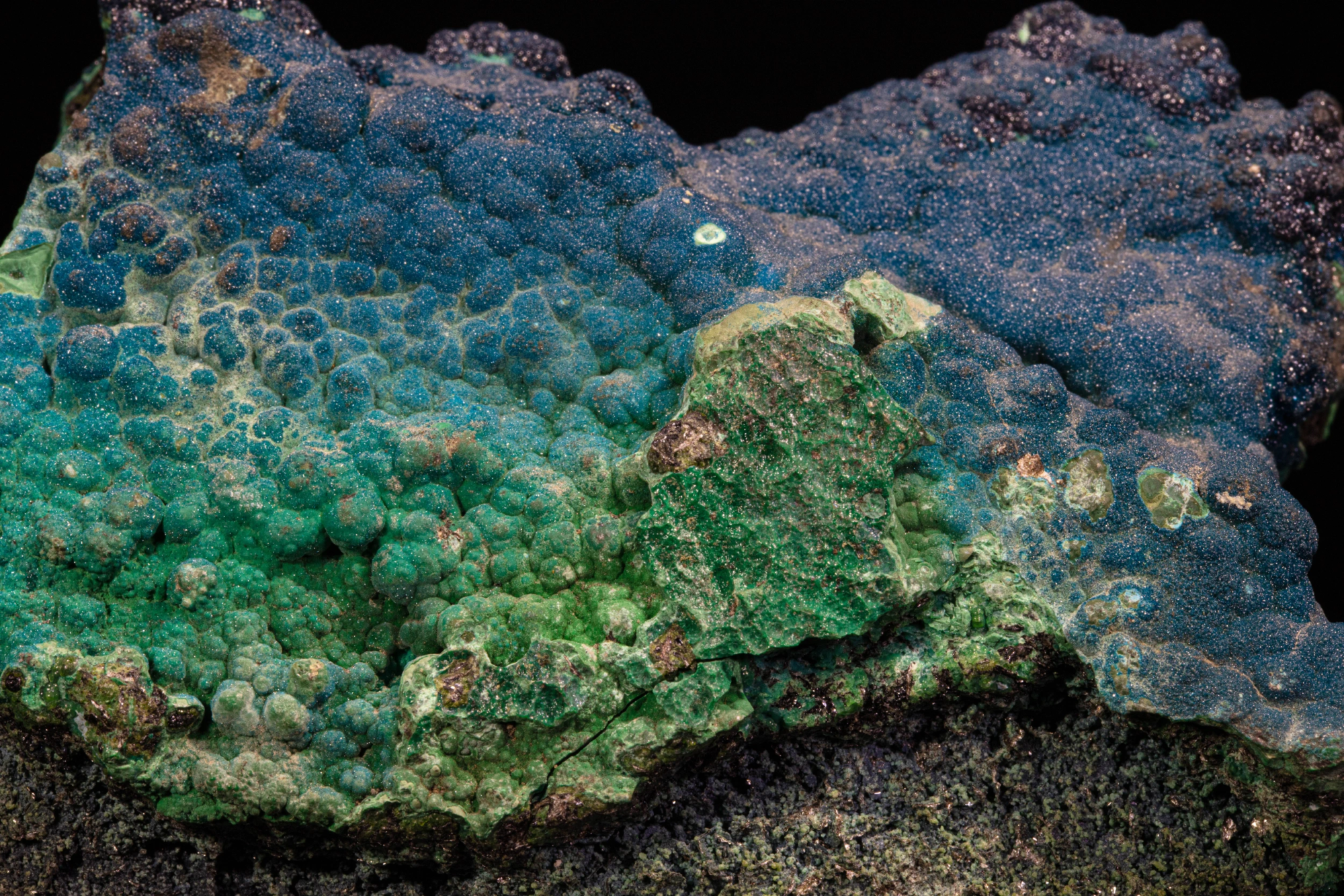
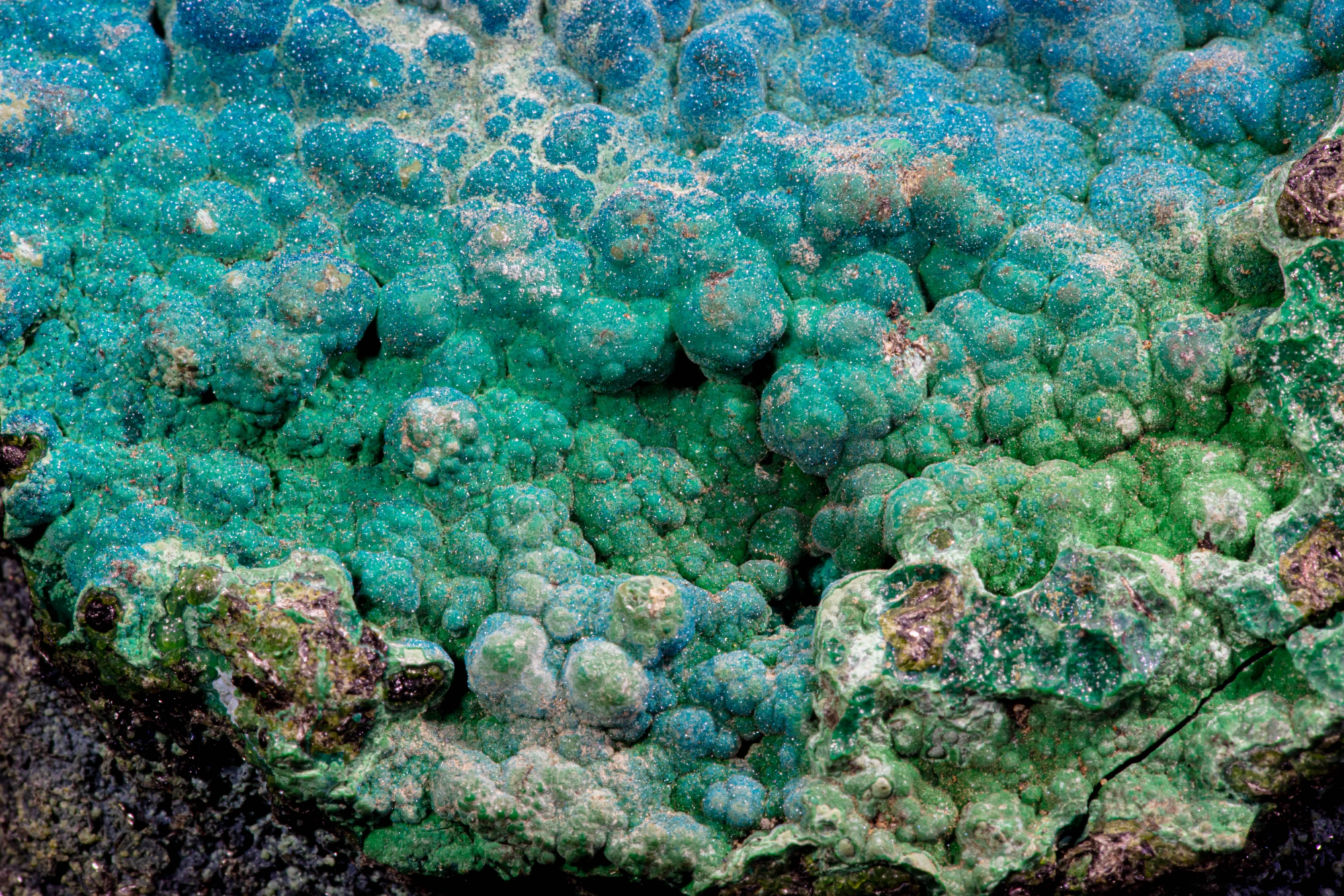
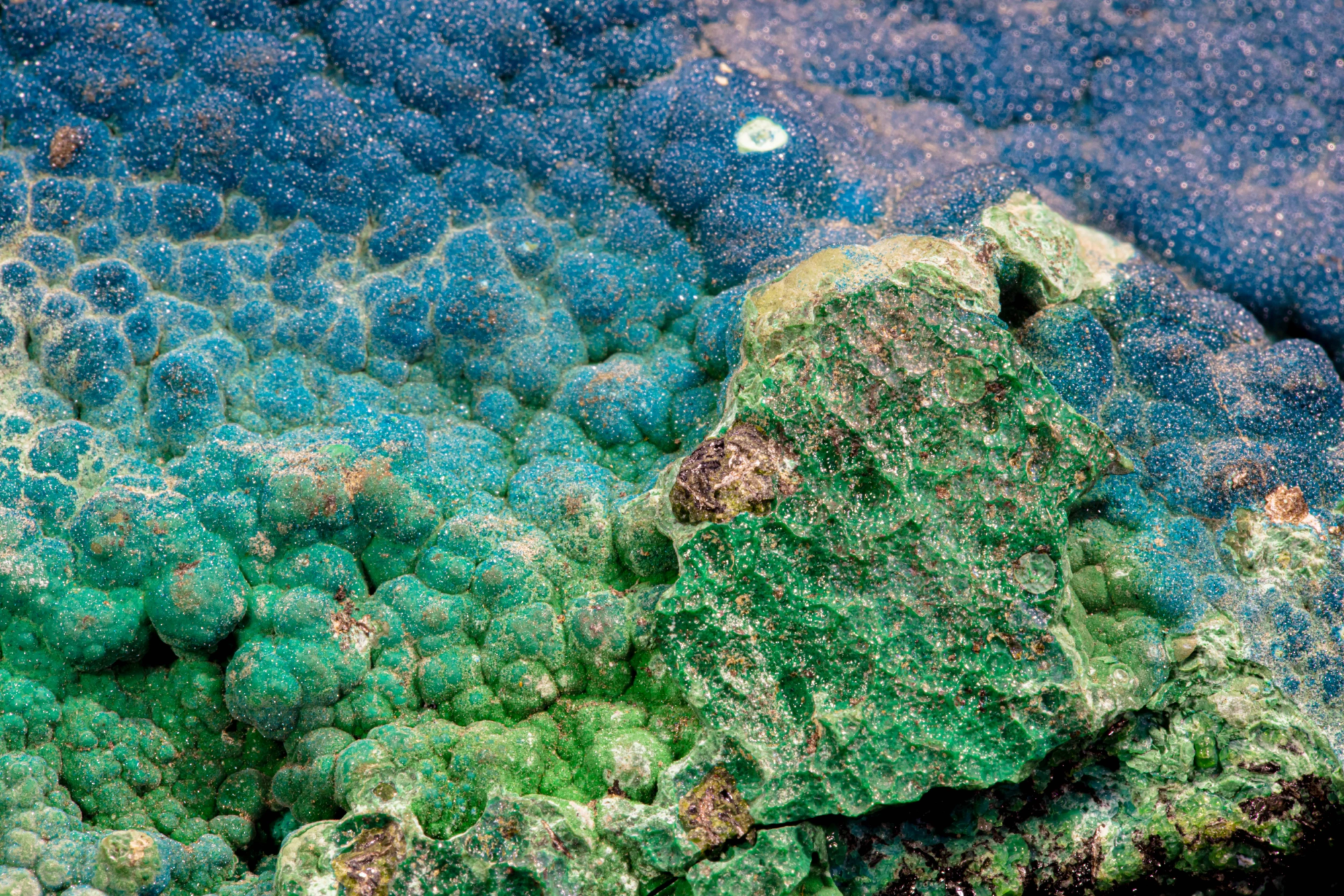
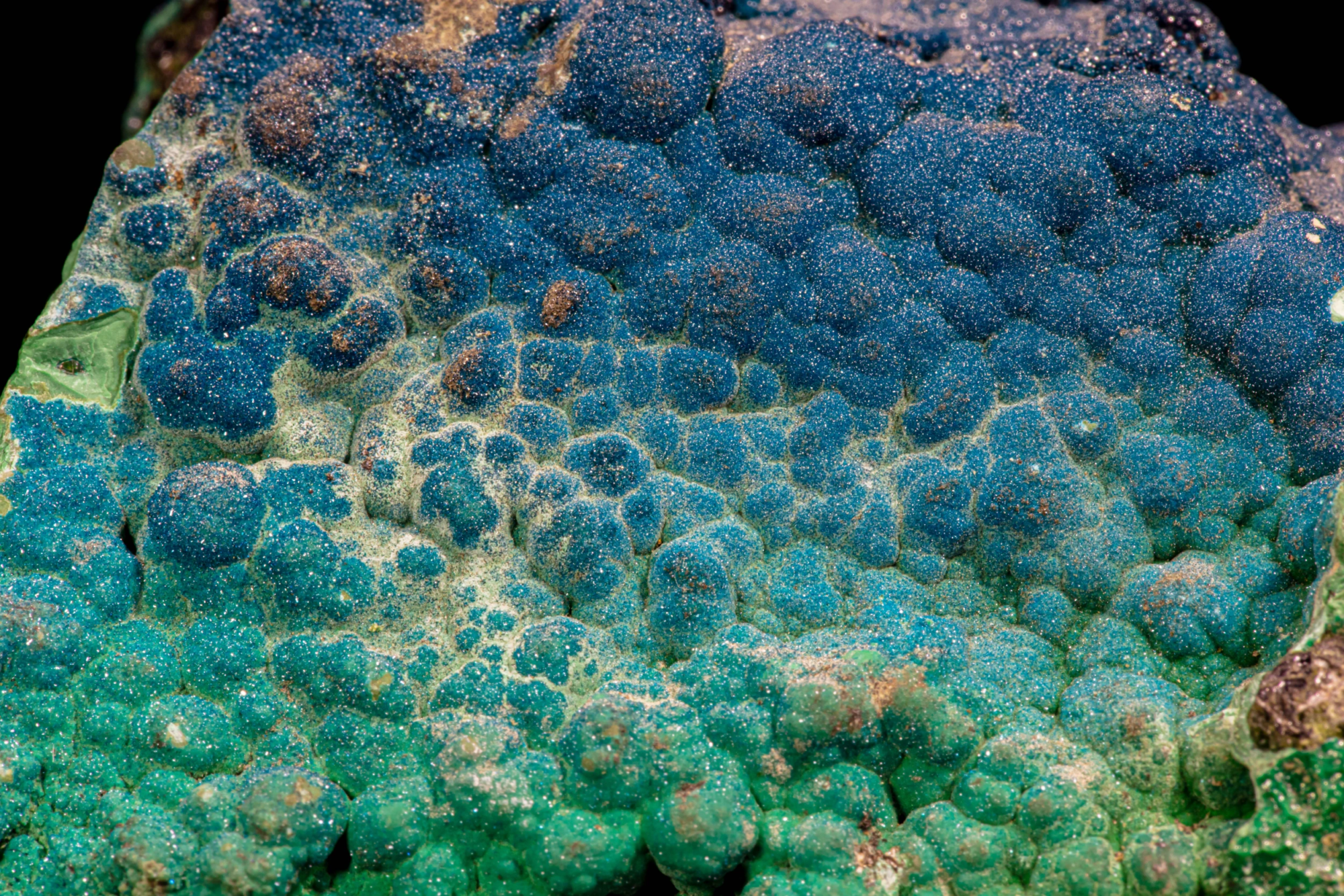
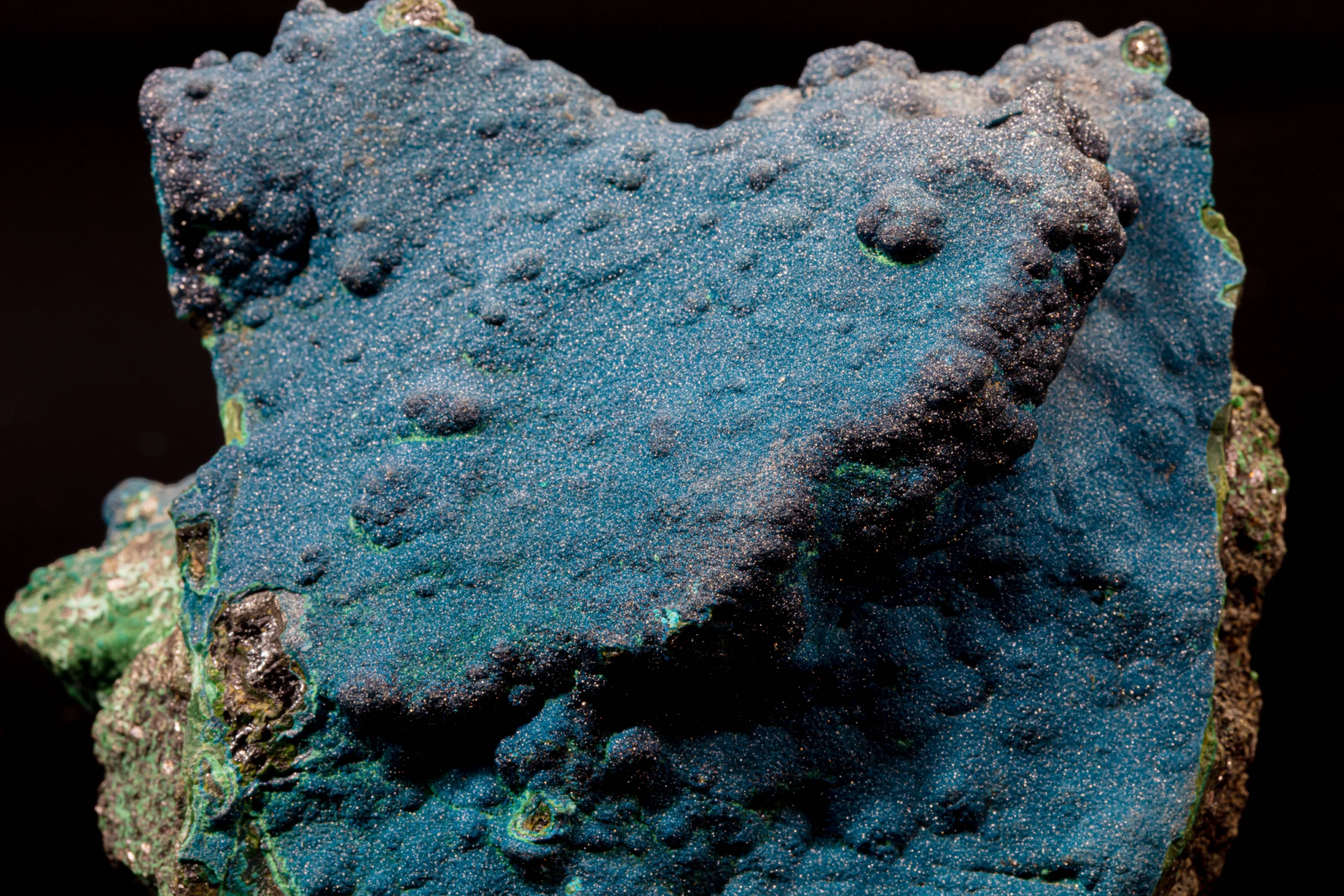
Cornetite runs from green-blue to a deep, saturated indigo, and a good specimen can show the entire range across a single surface. That is what this one does. The lower zones lean green, the upper reaches settle into a blue so dark it approaches black in the shadows.
The mineral is orthorhombic, with a hardness of 4.5 on the Mohs scale, soft enough to mark, hard enough to hold its form. Its luster is vitreous, and it grows here in a botryoidal habit: rounded, bubbled masses rather than distinct crystals, each dome coated in a fine microcrystalline druse that catches the light like sugar.
Behind the lens
This is where cornetite stops being easy.
The problem is not the mineral. It is the color, or rather the two ends of the color. Deep blue absorbs light. Green returns it. On the same specimen, in the same frame, one zone wants more light while the other is already giving back too much. Light the blue correctly and the green blows out. Protect the green and the blue collapses into an undifferentiated dark mass with no visible structure.
There is no exposure that solves both at once. The work is in the lighting: shaping it so the blue retains its depth without swallowing the detail, while the green keeps its saturation without flaring. The microcrystalline surface adds its own demand. Every one of those tiny facets is a potential highlight, and on a druse those highlights can turn into a field of blown white dots if the light hits them head-on rather than across.
The answer is soft, raking light, placed to graze the surface rather than strike it, so that each dome lifts into relief and the sparkle reads as texture instead of noise. It takes time. It is the kind of specimen that rewards patience and punishes shortcuts.
Why it is worth the trouble
Cornetite will never be a famous mineral. It is too rare, too small, too far from the mainstream of what most people collect. But that is part of what makes it worth photographing well. A specimen like this one comes from the mine that first gave the mineral its name. It deserves images that show what it actually is: the color, the range, the fine glitter of its surface, the quiet fact of being one of the first things a geologist ever pulled from the Congo and called new.
Rock of Science catalogues this specimen in full. It lives on a mineral collection platform built for a private collector, where its complete record and additional images can be seen.
 © Minerals Photography — Camarda Visual Studio LLC
 © Minerals Photography — Camarda Visual Studio LLC